The Biggest Reason for Seasonal Depression

(And Why It Shows Up in Your Child Every Winter)
Every winter, you watch it happen again.
As the days grow shorter, your child’s energy fades. Motivation drops. Emotions feel bigger and harder to manage. The meltdowns you thought were behind you in September start showing up daily. The anxiety you worked so hard to calm suddenly comes roaring back.
You’ve heard the explanation before:
Seasonal Affective Disorder.
Less sunlight. Chemical imbalances.
The recommendations follow quickly: light therapy, supplements, maybe even medication.
But there’s a question that keeps nagging at you:
Why does my child struggle like clockwork every year… while their sibling or classmates seem just fine?
That question matters, because the answer changes how you support your child not just in winter, but all year long.
The Pattern You Can’t Ignore
Let’s paint a picture you probably recognize.
In August and early September, things feel manageable.
Sleep is decent. Digestion is okay. There are still challenges, but you’ve found a rhythm. You’re coping.
Then October hits.
November arrives.
And suddenly… everything unravels.
Sleep becomes a nightly battle. Stomach issues flare back up. Emotional regulation feels impossible. Behaviors you thought were behind you return full force. No matter what you try — earlier bedtimes, stricter routines, cleaner food nothing seems to stick.
This isn’t coincidence.
It’s not bad parenting.
And it’s not “just in your head.”
Your child’s nervous system is sending a clear signal:
It’s running on empty.
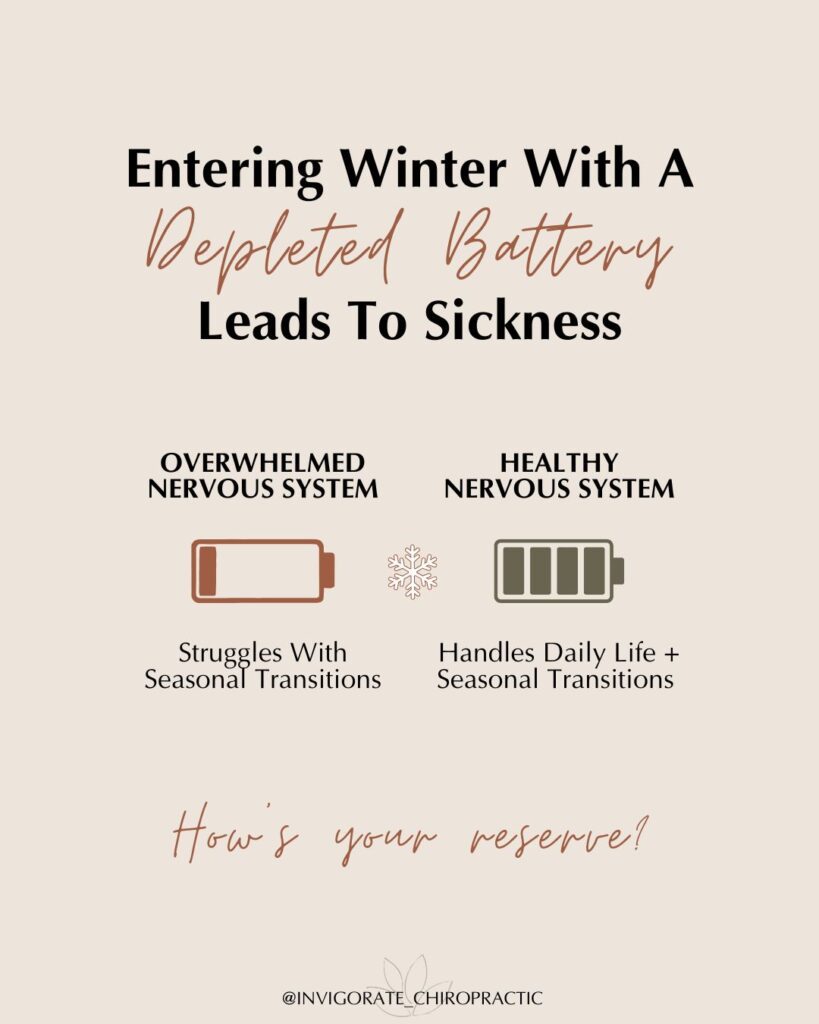
Your Child’s Nervous System Has a “Battery”
Think about your phone.
When it’s fully charged, it handles everything: apps, calls, videos, directions without missing a beat.
But when the battery gets low? Suddenly even basic tasks feel impossible.
Your child’s nervous system works the same way.
The autonomic nervous system has two main modes:
- The gas pedal (sympathetic system) — helps your child respond to stress, focus, and take action
- The brake pedal (parasympathetic system) — allows rest, digestion, sleep, emotional regulation, and healing
In a regulated nervous system, your child can move smoothly between the two. Focus when needed. Calm down when it’s time to rest.
But for many kids who struggle seasonally, here’s what’s happening:
👉 The gas pedal is stuck down
👉 The brake barely works
This state is called sympathetic dominance, and it’s exhausting.
Imagine driving everywhere with your foot on the gas and almost no ability to brake. That’s what your child’s nervous system is doing all day, every day.
Why Seasonal Changes Hit So Hard
Fall and winter don’t just bring colder weather they demand extra neurological adaptation.
Your child’s nervous system has to:
- Adjust circadian rhythms with less daylight
- Maintain neurotransmitter balance despite reduced sunlight
- Regulate body temperature in colder conditions
- Support immune function during cold and flu season
For a child with a full nervous system reserve; a charged battery, these changes happen quietly in the background.
But for a child whose system is already maxed out?
Seasonal change becomes the final straw.
There’s no reserve left.
The battery hits zero.
And that’s when everything crashes:
- Sleep
- Digestion
- Behavior
- Emotional regulation
This is neurological exhaustion, and it explains why your child struggles every single winter.
The “Perfect Storm” Didn’t Start This Year
Here’s what most parents are never told:
Your child’s seasonal vulnerability didn’t begin this fall.
It started years ago, possibly before they were even born.
Before Birth: The Programming Phase
High stress during pregnancy (work pressure, health concerns, emotional strain) exposes a developing baby to elevated cortisol. That stress can program the nervous system to expect danger, setting it to “high alert” from day one.
Birth: Physical Stress
Birth interventions like C-sections, forceps, vacuum extraction, or prolonged labor can place physical stress on the upper cervical spine and vagus nerve; key pathways for nervous system regulation.
This isn’t about blame. These interventions are often necessary, but they still matter neurologically.
Early Childhood: Compounding Stress
Colic, reflux, feeding struggles, ear infections, and repeated antibiotics all add stress to an already vulnerable system.
Antibiotics, in particular, disrupt the gut microbiome, which plays a major role in nervous system regulation.
Ages 3–7: When Labels Appear
As life demands increase, the signs become more obvious.
ADHD. Anxiety. Sensory challenges. Behavioral struggles.
But the nervous system imbalance was there long before the label.
Seasonal transitions simply expose what’s already struggling.
What This Means (And Why There’s Hope)
This may feel heavy, but here’s the empowering truth:
Your child isn’t broken.
They aren’t weak.
And this isn’t a character flaw or “bad chemistry.”
Their nervous system has lost reserve capacity and it needs support.
The good news?
The nervous system is designed to heal, adapt, and regulate when given the right input.
A Different Approach for This Winter
You’ve probably tried it all:
- Light therapy
- Vitamin D
- Melatonin
- Diet changes
- Behavior strategies
Some helped a little, but none addressed the root issue.
That’s where Neurologically Focused Chiropractic Care comes in.
At Invigorate Chiropractic, we work directly with the nervous system, helping release the physical stress patterns that keep your child stuck in survival mode.
The goal isn’t to “treat seasonal depression.”
The goal is to restore neurological resilience to recharge your child’s nervous system so they can adapt to seasonal changes without falling apart.
Parents often tell us they notice:
- Better sleep
- Fewer meltdowns
- Improved digestion
- Greater emotional stability
Not because we’re masking symptoms, but because their child’s nervous system is finally shifting out of survival and into regulation.
Your Next Step
You don’t have to brace yourself for another hard winter.
If your child struggles predictably every fall and winter, their nervous system is asking for help, and you’re wise to listen.
Here’s where to start:
- Recognize the pattern — seasonal struggles are a signal, not a coincidence
- Release the guilt — this isn’t about anything you did wrong
- Seek specialized care — schedule a consultation at Invigorate Chiropractic
- Trust the process — nervous system healing takes time, but the changes can be profound
If you’re not local to us, you can find a like-minded provider through the PX Docs directory.
This winter can be different.
Your child deserves energy, emotional stability, and resilience, not just survival through the darker months, but the ability to truly thrive.
You’ve already been an incredible advocate.
Now it’s time to support the root of it all; your child’s nervous system.
